
Muse on WhatsApp: what Meta is delivering and what your company can do
Meta launched Muse inside WhatsApp. See what it means for B2B service and how companies can deploy similar operational agents.
Mauricio Zaffari
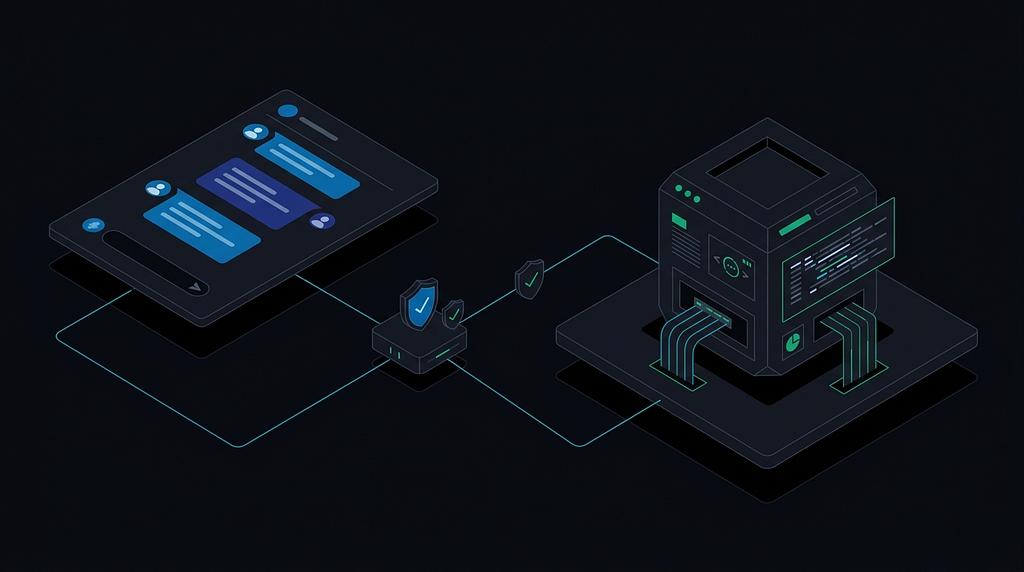
Meta launched Muse, a personal AI agent that can be accessed directly through WhatsApp. The product is still rolling out in the US, but the signal for companies is clear: service with context is entering a new phase, with agents that can actually execute tasks.
In this post: what Muse does, when an integrated agent makes sense in service, and how to start.
We are testing a similar idea in our own operation. It is not Muse - it is an internal solution connected to company systems, answering operational questions, querying data and executing backoffice actions via WhatsApp. The goal is not to replace people, but to reduce the repetitive work that slows the team down.
What does Muse do, and why does it matter for business?
Muse runs on an isolated virtual machine, with user-authorized actions and credentials held in protected storage. Meta says a version with the whole virtual machine encrypted is planned for later this year. It can send emails, make reservations, check calendars and interact with third-party apps. On WhatsApp, the experience is the same: you chat as if talking to a colleague, but on the other side is an AI with system access.
One caveat: according to Reuters, internal testing at Meta pointed to reliability failures in the first generation of the product. Agents that execute still fail, which is why the corporate design treats human review and access limits as part of the project, not an afterthought.
The difference from a traditional chatbot is execution. A generic chatbot answers questions. Muse acts.
What can your company do today?
We are building a solution in this format. It is an AI agent that lives in WhatsApp and connects to the systems your company already uses. It understands operational context, answers process questions, queries data and helps the team execute daily tasks. It is not a generic chatbot - it is a digital colleague that knows the process.
Unlike Muse, which is aimed at personal use, the solution we are building is designed for the corporate environment: controlled permissions, ERP and TMS integration, human review at critical points, auditable logs and data protection controls defined per project.
When to use a generic chatbot, an integrated agent or a human?
Not every conversation needs an integrated agent. The decision point is task complexity and risk of error.
| Scenario | Generic chatbot | Integrated agent | Human service |
|---|---|---|---|
| Frequent question about company policy | Yes | Optional | No |
| Order status query in ERP | No | Yes | No |
| Ticket creation or incident logging | Limited | Yes | No |
| Emotional complaint or crisis | No | Escalate to human | Yes |
| Financial approval or critical decision | No | With human review | Yes |
This decision flow is easy to visualize:
flowchart TD
  A["A conversation arrives"] --> B{"Is it a simple known question?"}
  B -- "Yes" --> C["Generic chatbot answers"]
  B -- "No" --> D{"Does it need to query a system or execute an action?"}
  D -- "Yes" --> E["Integrated agent acts and notifies"]
  D -- "No" --> F{"Does it require empathy or critical judgment?"}
  F -- "Yes" --> G["Human service takes over"]
  F -- "No" --> H["Integrated agent tries and escalates if needed"]
What changes in practice?
Before, the team had to stop what it was doing to answer a simple question or query a system. With an integrated agent, people ask on WhatsApp and get the answer or executed action without leaving their workflow. The gain is not just time - it is focus. The team stops interrupting work to answer, and only uses interruptions for real exceptions.
In the corporate environment, the agent needs to know the company process, respect permissions and escalate to human when risk increases.
How to start?
The first step is to identify flows where the team today loses time on repetitive questions, manual queries or rules-based tasks. If the answer is usually the same for the same question, if the data already exists in some system, if the task has predictable steps, there is potential for an integrated agent.
Consider a hypothetical scene. A supplier asks about the status of a delivery. The answer depends on the contract, the stage of the shipment and whether a document is pending. If those rules are already written down and the data exists in the TMS, the case passes the test: the agent queries the system, answers what it finds and routes to a person when the rule is ambiguous or the data is missing. If the rules live only in the team's heads or the data is not accessible, the same case fails, and no integrated agent fixes that before mapping work.
A diagnostic is usually planned for 2 to 3 weeks, followed by a pilot estimated at 4 to 6 weeks after scope definition. The pilot validates whether the flow improves in the real world before expanding the investment.
In summary
Meta's Muse shows that agents on messaging apps are already entering the mainstream. In the corporate environment, the same logic applies: agents that know the process and execute actions can reduce repetitive work and return focus to the team. The choice between generic chatbot, integrated agent and human service depends on task complexity and risk of error.